



How Restoration Contractors Protect Your Property
- Mayan Mobile
- Aug 16
- 5 min read

A burst pipe at 2 a.m., a kitchen fire, or storm water entering a commercial building creates more than a cleanup problem. Damage keeps moving through flooring, wall cavities, insulation, electrical systems, and indoor air. Restoration contractors take control early by stopping the source, documenting conditions, protecting what can be saved, and building a clear path back to pre-loss condition.
For Central New Jersey property owners, the right response can reduce structural damage, prevent mold growth, support a stronger insurance claim, and shorten the time a home or business is disrupted. The wrong response, or a delayed one, can turn a manageable loss into a larger reconstruction project.
What Restoration Contractors Actually Do
Disaster restoration is not the same as standard cleaning or general home repair. A qualified restoration team manages the urgent phase of a property loss, then coordinates the work required to restore safe, dry, usable conditions. That work may involve water extraction, structural drying, smoke and soot removal, mold containment, sewage sanitation, emergency board-up, debris removal, and reconstruction-related repairs.
The work begins with determining what happened and where the damage traveled. Water often moves farther than the visible stain. Smoke can enter closets, ductwork, and porous materials well beyond the room where a fire started. Mold may grow behind walls after a slow plumbing leak with few outward signs. A careful assessment protects the property owner from making decisions based only on what is easy to see.
Professional teams use moisture meters, thermal imaging, humidity readings, and detailed visual inspections to identify affected materials. Those findings shape the scope of work: what can be dried and cleaned, what needs controlled removal, what must be secured immediately, and what documentation the insurer will need.
Why the First 24 Hours Matter
After a water loss, time is a structural issue. Drywall can absorb water quickly, flooring can buckle, and moisture trapped in wall systems can create conditions for microbial growth. After a fire, acidic soot residues can continue damaging metal, glass, finishes, and electronics. After a sewage backup, contaminated water presents immediate health and sanitation concerns.
The first priority is safety. Property owners should avoid entering areas with standing water near electrical sources, unstable ceilings, fire-damaged framing, or sewage contamination. If it is safe to do so, stop the source of water, move dry valuables away from the affected area, and photograph visible conditions before major cleanup begins. Do not use a household vacuum on standing water or attempt to dry hidden cavities with a fan and an open window.
A rapid-response crew can stabilize the loss by extracting water, setting drying equipment, establishing containment, removing unsalvageable materials, or boarding up exposed openings. Fast action does not mean rushed action. Each step should be measured, documented, and adjusted as conditions change.
The Restoration Process Should Be Clear
A dependable contractor does not leave a property owner guessing what happens next. The process should be direct, documented, and tied to the specific type of damage.
Emergency contact and property stabilization
The initial call should establish the cause of loss, immediate hazards, the property type, and whether the damage is active. A commercial property may need a plan that protects equipment, inventory, tenants, and business operations. A homeowner may need help securing the house, protecting personal belongings, and preventing further water intrusion.
At the property, the team addresses emergency conditions first. That may include water removal, temporary roof protection, emergency board-up, or isolation of contaminated areas. The objective is to prevent additional damage while preparing for a complete assessment.
Damage assessment and documentation
Next comes the evidence. Technicians should record affected rooms, materials, moisture readings, photos, equipment placement, and recommended mitigation steps. For insurance losses, precise documentation matters. It supports the scope of damage and helps show why drying, removal, cleaning, or repair was necessary.
Xactimate-based estimates are commonly used in the insurance industry because they organize restoration pricing and line items in a format carriers recognize. Documentation does not guarantee a particular claim outcome, but it can reduce confusion and help keep the restoration plan aligned with the actual loss.
Mitigation, cleaning, and controlled drying
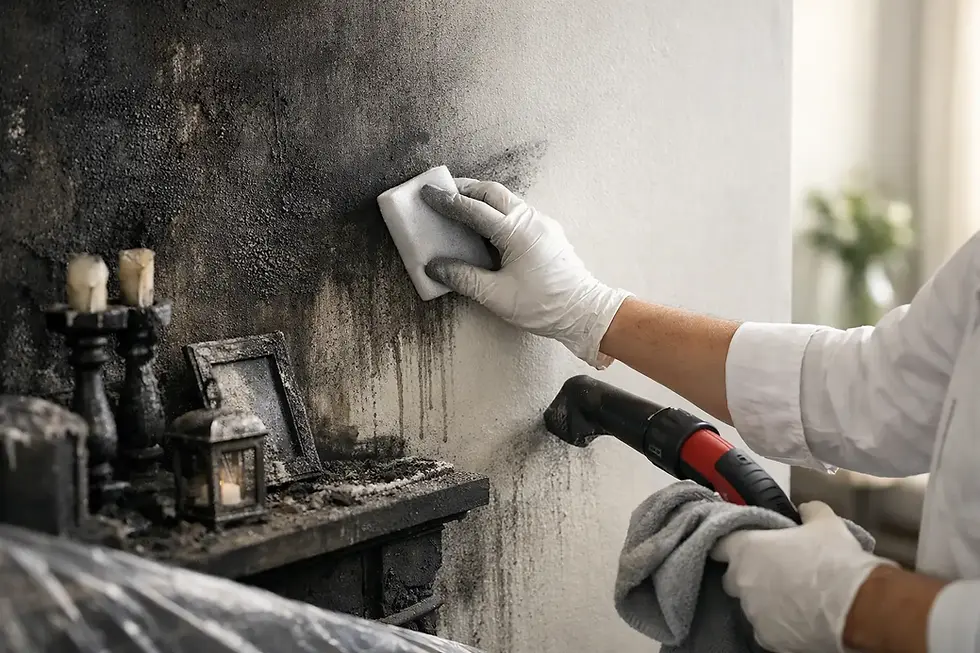
Mitigation is the work that limits further damage. Depending on the loss, this can include industrial extraction, dehumidification, air movement, HEPA filtration, soot cleaning, antimicrobial treatment where appropriate, or removal of materials that cannot be safely restored.
Drying is not complete when a surface feels dry to the touch. Technicians should monitor moisture levels in affected materials and compare them with appropriate drying goals. Removing equipment too soon can leave hidden moisture behind. Running equipment longer than necessary can increase inconvenience and cost, so monitoring is essential.
Repairs and restoration to pre-loss condition
Once the property is clean, dry, and stable, reconstruction-related work can begin. This may involve drywall, insulation, flooring, paint, trim, tile, electrical, plumbing, or other repairs. Some losses require a focused repair; others expose an opportunity to improve a damaged bathroom, entryway, attic, or commercial space while work is already underway.
That decision depends on budget, insurance coverage, building requirements, and the owner’s goals. A restoration provider with renovation capability can make the transition from emergency mitigation to repairs more coordinated, but the scope should remain transparent. Property owners should understand which work addresses covered damage and which upgrades are elective.
How to Choose Restoration Contractors After a Loss
An emergency is not the ideal time to compare companies, yet the choice matters. Look beyond a promise to arrive quickly. The contractor should be able to explain how they will inspect, contain, document, dry, clean, and communicate throughout the job.
Credentials are a practical starting point. IICRC-certified technicians have training in recognized restoration practices for areas such as water damage, fire and smoke restoration, and mold remediation. Proper licensing and insurance are equally important, particularly when the work may involve structural repairs or coordination with other trades.
Ask how the company measures drying progress, how it handles contaminated water, and whether it provides detailed photos and records for the insurance claim. Ask who will be your point of contact and how often you will receive updates. A professional answer should be specific, not vague.
Local response also matters. Central New Jersey weather, housing styles, basement conditions, and municipal requirements can affect the work. A nearby team can reach the property faster, return for moisture monitoring, and coordinate practical next steps without treating the job as a remote transaction.
Insurance Support Without Surrendering Control
Insurance claims can add pressure when a property owner is already dealing with damaged belongings, displaced family members, tenants, or interrupted operations. A restoration contractor can document the loss, prepare an itemized estimate, communicate with the adjuster, and provide records of mitigation work.
Still, the policyholder remains the customer and should stay informed. Ask for copies of estimates, work authorizations, daily drying logs when applicable, and change approvals. Review what the insurer has approved and what remains under discussion. Clear records help protect everyone involved.
Be cautious of anyone who guarantees the insurer will pay for everything or pressures you to sign broad paperwork before explaining the scope. Good insurance coordination is built on facts: the cause of loss, the documented damage, the required work, and the policy’s terms.
A Different Standard for High-Stress Property Damage
The Seven Wonders Difference is disciplined response combined with complete recovery. Seven Wonders Pro Cleaning brings IICRC-certified technicians, industrial-grade drying and extraction equipment, thermal imaging, documented restoration planning, and insurance-focused estimating to residential and commercial losses across Central New Jersey.
That approach matters because property damage rarely fits into one trade. Water can affect flooring, drywall, electrical systems, cabinetry, and indoor air. Fire can require odor control, soot removal, contents protection, and repairs. A capable restoration partner manages the sequence so work is not duplicated, delayed, or performed before the property is ready.
When damage interrupts your property, do not measure a contractor only by how quickly equipment arrives. Measure them by whether they can identify the full problem, protect your health and structure, document each decision, communicate clearly with your insurer, and carry the work through to a property you can confidently use again. That is the standard your home, tenants, customers, and peace of mind deserve.


Comments