



Commercial Property Restoration Guide for Fast Recovery

A burst sprinkler line above a retail floor, a kitchen fire in a restaurant, or stormwater entering an office suite can shut down operations in minutes. This commercial property restoration guide is built for the decisions that matter first: protecting people, limiting secondary damage, documenting the loss, and returning your facility to safe use without cutting corners.
For Central New Jersey property owners, landlords, and facility managers, restoration is not simply a cleanup task. It is an operational recovery process. The right response protects the building, your inventory and equipment, your tenants or employees, and the insurance claim that supports the work ahead.
The First Hours Set the Recovery Timeline
Emergency conditions move quickly. Water can travel beneath flooring, through wall cavities, and into insulation long after the visible puddle is removed. Smoke residues can migrate through HVAC pathways. Sewage backups create sanitation concerns that require controlled cleanup, not ordinary janitorial service.
Start by addressing immediate life-safety risks. Keep employees, customers, and tenants away from affected areas. If there is active fire damage, structural instability, electrical exposure, contaminated water, or a gas-related concern, contact the appropriate emergency authority first. Do not re-enter until the space is cleared for safe access.
Once the area is safe, take reasonable steps to prevent additional loss. Shut off the water source if possible, protect unaffected inventory, move records and electronics from danger, and use temporary board-up or roof protection when the exterior has been compromised. Avoid removing damaged materials or discarding inventory before it has been documented unless doing so is necessary for safety or to stop further damage.
A professional restoration team should be engaged early, especially for large losses, contaminated water, fire residues, mold concerns, or damage affecting multiple suites. Fast action is valuable, but speed without a plan can create problems later. The goal is controlled mitigation backed by measurements, photos, and clear communication.
A Commercial Property Restoration Guide to the Core Process
Commercial restoration typically follows four connected stages: emergency contact, damage assessment, restoration planning, and professional mitigation and reconstruction. Each stage affects the next, which is why a single accountable restoration partner can reduce confusion during a stressful event.
1. Emergency contact and site stabilization
The first call should establish what happened, whether the loss is ongoing, which areas are affected, and whether the building can remain occupied. A 24/7 response team can dispatch technicians, begin extraction or emergency board-up, and identify conditions that need immediate containment.
For a warehouse, this may mean protecting stored goods and keeping forklift lanes safe. For a medical or professional office, it may mean isolating affected rooms while preserving access to critical records and equipment. For a multi-tenant building, it often means coordinating access, communicating with tenants, and separating the source area from unaffected suites.
2. Damage assessment with documented evidence
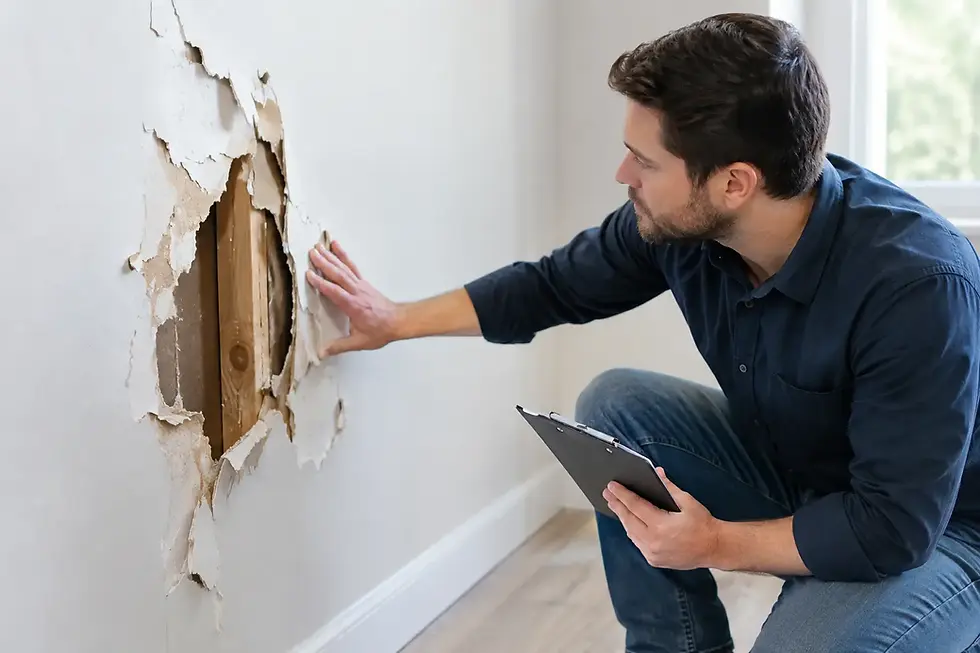
Visible damage is only part of the picture. Moisture meters, thermal imaging, humidity readings, and material testing help identify hidden water migration and determine whether drying is practical or removal is necessary. Fire and smoke losses require assessment of soot distribution, odors, affected contents, and HVAC exposure.
Documentation should include dated photos, equipment logs, moisture maps, affected-material records, and a written scope of work. This information supports sound restoration decisions and gives the insurer a clearer picture of the loss. For commercial properties, it also helps owners explain the timeline and scope to tenants, lenders, partners, or corporate leadership.
3. A restoration plan that supports operations
There is no one-size-fits-all drying or cleanup plan. The correct approach depends on the source of damage, building materials, occupancy, contamination level, and the business activities taking place on site.
A retail shop may need work scheduled around limited operating hours. A restaurant may need specialized cleaning and sanitation before reopening. A property with sensitive electronics, archived files, or high-value inventory needs a contents strategy alongside building restoration. In some cases, partial occupancy is possible with proper containment and safety controls. In others, closure is the responsible decision.
A clear plan should identify the affected areas, safety controls, drying or cleaning methods, projected milestones, responsible parties, and the work needed to restore the property to pre-loss condition. It should also explain what cannot be known until demolition, drying, or cleaning exposes concealed damage.
4. Mitigation, remediation, and reconstruction
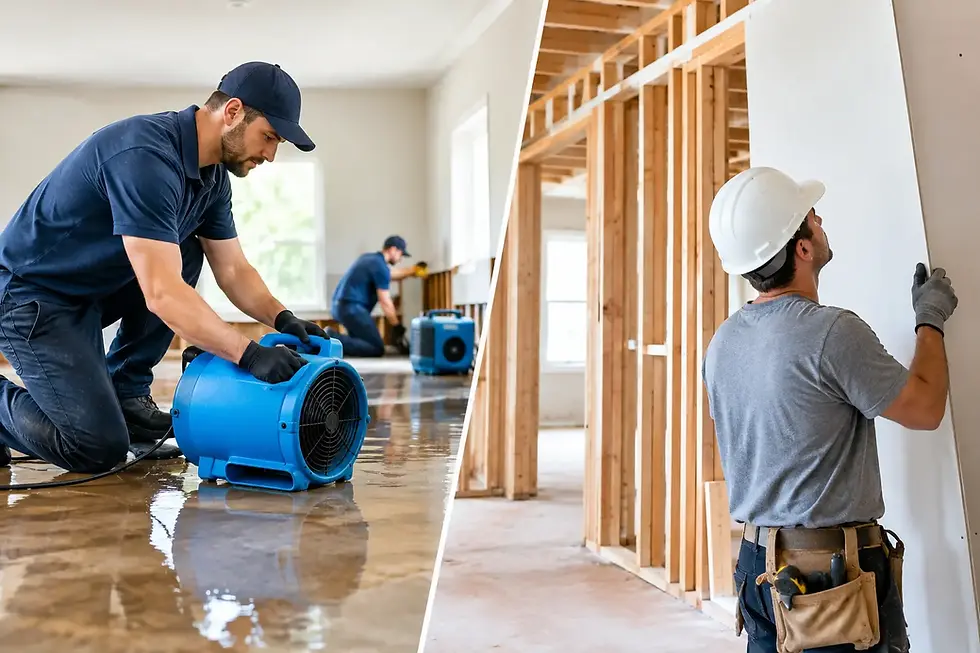
Mitigation stops the damage from growing. It can include water extraction, structural drying, debris removal, smoke cleaning, odor control, sanitation, mold containment, and temporary protection. Reconstruction addresses the materials that cannot be saved, such as drywall, flooring, ceilings, insulation, trim, roofing components, or damaged finishes.
These stages should not be treated as disconnected jobs. Poorly managed demolition can complicate reconstruction. Incomplete drying can lead to mold growth, material failure, and disputes over what was actually restored. A disciplined restoration process verifies drying results before rebuilding begins and keeps the owner informed of changes to scope.
Protect People, Inventory, and Business Continuity
Commercial damage has consequences beyond the building itself. A closed location may lose revenue, disrupt staff schedules, delay deliveries, and strain customer relationships. That makes continuity planning part of the restoration conversation.
Begin by separating affected and unaffected property. Move saleable inventory, files, and movable equipment only when it can be done safely and documented properly. Do not plug in wet electronics or operate equipment exposed to water until it has been evaluated. If smoke or soot is present, avoid wiping surfaces with household products. Improper cleaning can spread residues or permanently damage finishes.
For occupied buildings, communicate early and specifically. Tenants and employees need to know which entrances are open, which areas are restricted, what safety measures are in place, and when the next update will arrive. Uncertainty creates frustration. A short daily update can be more valuable than an overly optimistic reopening date that later changes.
Consider the trade-off between rapid reopening and complete access. A phased return may protect revenue, but only if air quality, electrical safety, sanitation, and building access are properly controlled. Reopening too soon can expose people to hazards and create a second interruption when corrective work becomes necessary.
Insurance Documentation Is Part of the Work
Many commercial property owners are surprised by how much the claim depends on clear documentation. Insurance carriers need evidence of the cause, extent, emergency actions taken, affected materials, and reasonable restoration costs. The property owner should report the loss promptly, preserve damaged items when practical, and keep records of all communications and expenses.
A restoration contractor that prepares detailed, itemized documentation can make this process more manageable. Xactimate-based estimates, moisture records, photographs, and daily job notes help support the scope of work. They do not guarantee coverage, since policy terms, deductibles, exclusions, and carrier decisions vary, but they provide the factual foundation a claim needs.
Ask direct questions throughout the process: What work is emergency mitigation? What work requires approval? What materials can be dried or cleaned? What must be replaced? Who is communicating with the adjuster? Written answers help prevent misunderstandings between owners, carriers, tenants, and contractors.
When Specialized Restoration Is Required
Some losses require more than extraction and drying. Sewage contamination, mold growth, fire residues, and storm-related structural damage each demand different controls.
Sewage cleanup requires removal of contaminated materials where needed, thorough cleaning, sanitation, and safe disposal. Mold remediation may require containment barriers, controlled air movement, removal of impacted porous materials, and verification that the moisture condition that allowed growth has been corrected. Fire damage may involve soot removal, odor treatment, content cleaning, and inspection of hidden smoke migration.
Storm damage can be equally complex. Wind-driven rain may enter through roofs, windows, siding, or damaged flashing, allowing water to travel far from the visible entry point. Emergency tarping and board-up protect the property, but interior moisture detection is still essential before repairs are closed up.
Seven Wonders Pro Cleaning provides Central New Jersey commercial property owners with IICRC-certified technicians, industrial-grade drying and extraction equipment, detailed damage documentation, and direct insurance coordination. The objective is precision restoration that protects the building and gives owners a clear path forward.
Choose a Restoration Partner Before the Next Loss
The best time to identify an emergency restoration provider is before a pipe breaks or a storm moves through. Confirm that the contractor offers 24/7 response, carries proper licensing and insurance, understands commercial documentation requirements, and can manage both mitigation and reconstruction-related work. Ask how they monitor drying, communicate progress, protect unaffected areas, and coordinate with insurance carriers.
Keep key contacts, utility shutoff information, tenant notification procedures, and insurance policy details accessible to the people who will be first on site. When damage occurs, a calm, documented response can protect far more than walls and flooring. It can protect the confidence people have in your ability to keep the business moving.

Comments