



Mold Inspection Service Reviews That Protect You

A musty odor after a basement flood, a dark patch near a bathroom ceiling, or recurring condensation around windows can make any property owner wonder how serious the problem is. Mold inspection service reviews can help you choose a qualified professional, but only when you know what those reviews should actually tell you. The best reviews reveal more than whether a technician was polite. They show whether the company identified moisture correctly, explained the findings clearly, documented the condition, and gave the customer a defensible path forward.
For homeowners, landlords, and property managers in Central New Jersey, the stakes are practical. A weak inspection can leave hidden moisture behind, allow contamination to spread, delay repairs, and create disputes with tenants or insurance carriers. A disciplined inspection creates clarity before you commit to cleanup or reconstruction.
What Mold Inspection Service Reviews Should Reveal
A five-star rating alone is not proof of technical competence. Mold is a moisture problem first, and a trustworthy review often describes how the inspector investigated the source of that moisture. Look for specific references to thermal imaging, moisture meters, humidity readings, crawl spaces, wall cavities, roof leaks, plumbing failures, or prior water damage.
Reviews with useful detail often mention that the inspector took time to explain what was visible and what required further investigation. For example, a customer may describe a technician finding elevated moisture behind baseboards after a pipe leak, then recommending targeted removal and structural drying. That is more meaningful than a review that simply says, "Great service."
Strong feedback also reflects clear communication. Property owners should understand whether they are dealing with surface mildew from condensation, active hidden moisture, or a larger contamination concern. The right provider does not use alarming language to pressure you into unnecessary work. They explain the condition, the evidence, the recommended scope, and the consequences of waiting.
Look for Evidence, Not Vague Promises
The most credible reviews tend to describe the work performed. They may mention a detailed assessment, photographs, moisture mapping, containment recommendations, air or surface sampling when appropriate, and a written report. These details indicate that the company is working from observable conditions rather than assumptions.
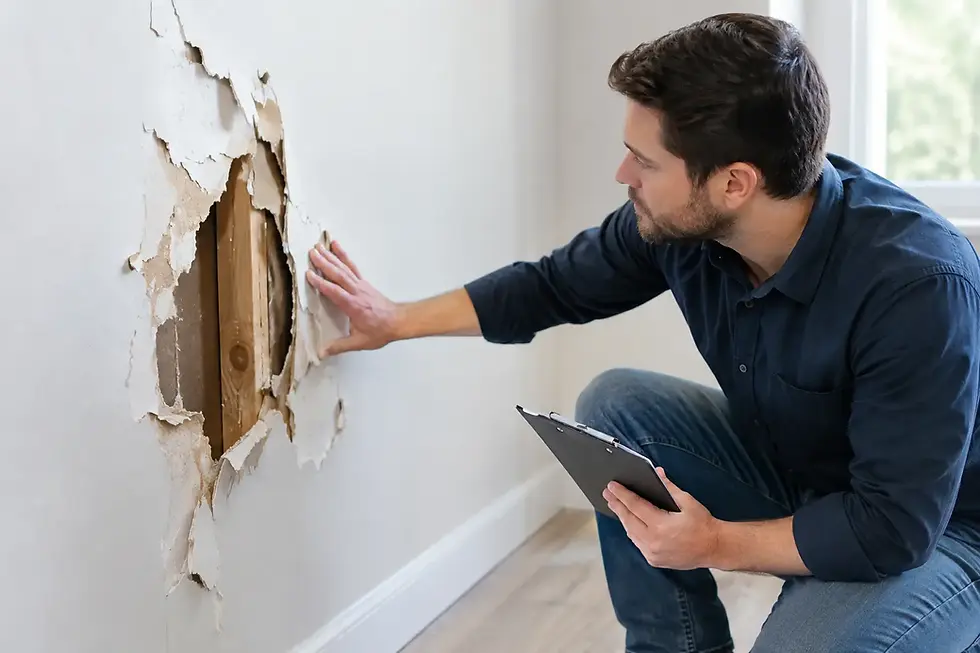
Be cautious with reviews that praise a company for declaring the property "mold-free" after a quick visual walk-through. Mold can be visible, but the moisture conditions supporting it may be concealed behind drywall, under flooring, inside insulation, or in an attic. A responsible inspection considers the building system, not just the stain on the wall.
The Difference Between Inspection, Testing, and Remediation
Many reviews use these terms interchangeably, which can confuse property owners. An inspection is the investigation of visible conditions, moisture sources, and affected materials. Testing may involve collecting air or surface samples for laboratory analysis. Remediation is the controlled removal of mold-affected materials and correction of the underlying moisture problem.
Testing is not automatically required in every situation. If visible mold is present and the moisture source is clear, a qualified professional may be able to recommend remediation without expensive sampling. Testing can be useful when contamination is suspected but not visible, when occupants need documentation, when a property transaction is involved, or when clearance verification is needed after remediation.
Reviews are especially helpful when they show that a provider explained this distinction instead of selling testing as a one-size-fits-all service. A careful inspector should tell you what testing can answer and what it cannot. A lab result does not repair a leak, dry wet framing, or replace damaged drywall.
Independence Can Matter
Some property owners prefer an independent mold inspector who does not perform remediation work. This can reduce concerns about a conflict of interest, particularly for a large or disputed project. In other cases, using one qualified restoration team for assessment, mitigation, documentation, and rebuilding can reduce delays after an emergency.
The right approach depends on the scope, the insurance situation, and the level of confidence you need. If one company handles both inspection and remediation, look for reviews that mention transparent findings, clear estimates, documented moisture readings, and no-pressure explanations. Those practices protect the customer regardless of the service model.
Red Flags in Mold Inspection Service Reviews
A few negative reviews do not automatically disqualify a company. Restoration work can involve insurance delays, hidden damage, and changing scopes once walls or floors are opened. What matters is the pattern and how the company responds.
Pay attention if multiple reviewers describe missed appointments, incomplete reports, surprise charges, poor communication, or work starting without a clear explanation of the scope. These are operational problems that can become costly during a mold project. You should also be wary of claims that every mold concern requires total demolition or that a small visible area can always be handled with a spray treatment.
Another warning sign is a provider that focuses only on removal while avoiding the source of the moisture. Mold remediation without moisture control is temporary. If a roof leak, plumbing leak, foundation seepage, poor ventilation, or humidity issue remains, growth can return on newly repaired materials.
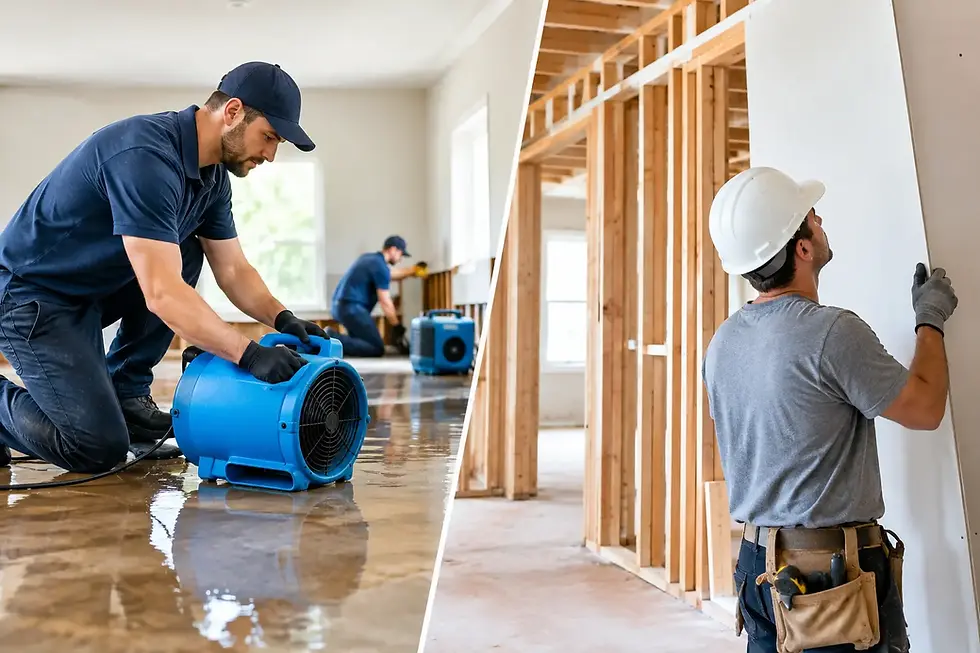
A reliable company addresses the full sequence: identify the moisture, stop the source, protect unaffected areas with containment when needed, remove or clean impacted materials using appropriate methods, dry the structure, and document the work. If repairs are required, the plan should explain who completes them and how the property moves toward pre-loss condition.
Questions to Ask Before You Schedule an Inspection
Reviews should narrow your options, but a direct conversation should confirm the company is prepared for your property. Ask how the inspection identifies hidden moisture and whether the technician uses moisture detection tools or thermal imaging. Ask what documentation you will receive, whether testing is recommended for your situation, and how the company determines the extent of affected materials.
For a rental property or commercial space, ask how they will minimize disruption and document the condition for owners, tenants, or facilities teams. If the loss may involve insurance, ask whether they can provide photographs, drying records, itemized estimates, and claim-ready documentation. A provider familiar with Xactimate-based estimating and insurer communication can help prevent avoidable gaps between emergency mitigation and approved repairs.
Credentials should also be easy to verify. Look for properly insured contractors and technicians trained in recognized restoration standards, including IICRC certification where applicable. Licensing, insurance, and professional documentation do not guarantee perfect results, but they show that the company takes accountability seriously.
Read Reviews With Your Property Type in Mind
A review from a homeowner with a small bathroom moisture issue may not tell you much about a commercial property with a roof leak affecting several offices. Search for experiences that resemble your own: flooded basements, sewage backups, attic condensation, appliance leaks, storm intrusion, fire sprinkler releases, or recurring tenant complaints.
For older Central New Jersey homes, reviews that mention careful investigation are particularly valuable. Plaster walls, finished basements, older plumbing, and past renovations can hide moisture paths that are not obvious from the room where staining first appears. For property managers, responsiveness matters just as much as technical knowledge. A delayed inspection can mean additional tenant disruption, lost use of space, and a larger repair bill.
Seven Wonders Pro Cleaning approaches mold concerns as part of a complete property recovery process: assess the moisture condition, document the damage, establish a controlled restoration plan, and coordinate the work needed to return the property toward pre-loss condition. That approach is especially valuable when mold follows a flood, plumbing failure, storm event, or sewage backup rather than appearing as an isolated surface issue.
Make the Review Process Work for You
Read recent reviews first, then compare them with older feedback to see whether the company has maintained its standards over time. Look for recurring proof of fast response, clear communication, technical assessment, clean work areas, and completed repairs. If a review mentions a problem, see whether the provider responded professionally and worked toward a solution.
Before the inspection, take photos of visible staining, note when odors are strongest, and write down any recent leaks, flooding, or repairs. That information gives the inspector a better starting point and helps connect symptoms to likely moisture sources.
The right review should leave you with confidence that the provider will investigate carefully, tell you the truth about the condition, and give you a plan you can act on. When your property is involved, clarity is not a luxury. It is the first step toward a safer, drier, properly restored space.

Comments